The MEP Ego Trap — And How It Kills Projects
 By SWETHA K RAJAN
MEP Design Team Lead
1. The Expertise Illusion
In MEP design, it's easy to think:
- "The architect doesn't understand services."
- "The structural team always finalizes beams without thinking of ducts."
- "The contractor doesn't follow the drawings properly."
- "The vendor always tries to push alternate items."
Sometimes these are true. But the moment we think our technical superiority gives us the final say, we lose the project's bigger picture.
Engineering is not a solo sport. It's a relay — and the building is the baton.
2. When Ego Enters, the Project Suffers
The ego trap shows up in small ways:
- Being rigid about routing instead of finding a workable path with the architect.
- Rejecting vendor suggestions without hearing them out.
- Dismissing contractor concerns as "execution problems."
- Designing purely based on standards without understanding site realities.
Each of these decisions creates friction, delays, and unnecessary rework.
The irony? We think we are "protecting the design," but we are actually isolating ourselves from the team that makes the design real.
A Story I'm Not Proud Of
Early in my career, I designed a riser route for an HVAC system. It was code-perfect. Every calculation checked out. The drawings were clean.
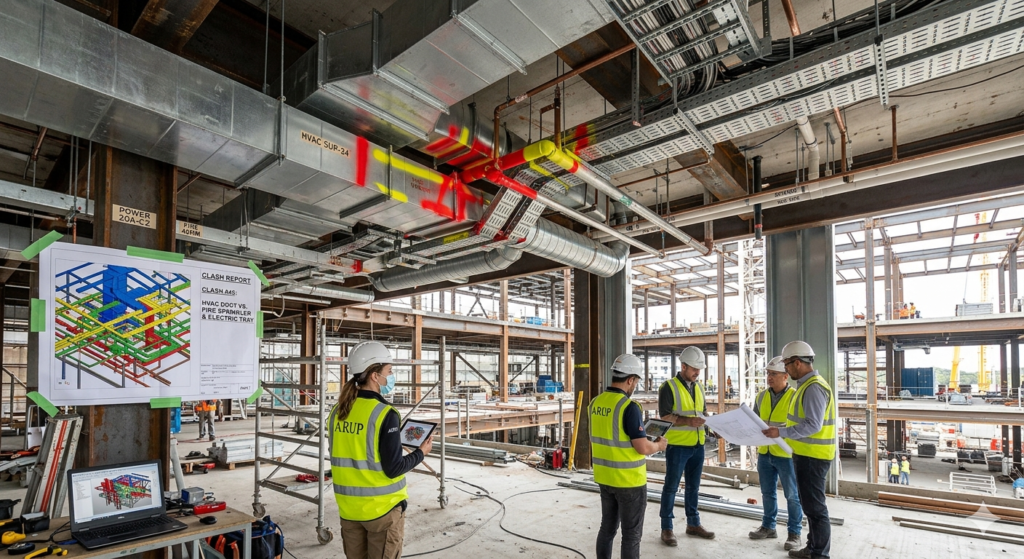
Then the contractor flagged a structural clash during coordination. A beam we hadn't accounted for was directly in the path.
I pushed back. Hard. "The structural team should have shared this earlier. This is the most efficient route. We're not changing it."
Two weeks later, we had to reroute anyway — after the architect got involved, after the client questioned the delay, and after the cost had doubled.
I was technically right. But the project lost. And so did my relationship with that contractor for the next six months.
That's when I learned: Being right doesn't always mean the project wins.
3. When Standing Firm Is the Right Call
Now, let me be clear — collaboration doesn't mean caving on everything.
There are times when you must stand firm:
- Safety: If a design change compromises fire safety, ventilation rates, or structural integrity, you don't negotiate.
- Code compliance: Standards exist for a reason. If a vendor suggests something that violates IS codes or NBC, you push back — with data.
- System performance: If a "value engineering" suggestion will cause long-term inefficiency or failure, you protect the design.
But here's the key: When you stand firm, you explain why — clearly, respectfully, and without arrogance.
You're not defending your ego. You're defending the building's performance. And people can feel the difference.
4. Collaboration Doesn't Reduce Technical Authority — It Strengthens It
The most effective MEP designers I've met share one trait: They listen.
They walk the site with contractors. They sit with architects early. They ask vendors for insights. They understand structural limitations before finalizing risers.
And because they listen, their decisions carry more weight. Not because of ego — but because of trust.
5. The Real Technical Skill No One Talks About
The best designers know:
How to simplify complex technical concepts for non-technical people.
Instead of saying "We need 150 Pa static pressure," say "We need this much push to move air through the ducts — like water pressure in a pipe."
How to defend a design without sounding defensive.
Replace "This is the only way" with "Here's why this approach works best, but I'm open to hearing constraints."
How to negotiate space — not fight for it.
Work with the architect to find creative routing solutions instead of demanding more ceiling space.
How to balance standards with practicality.
Know when to apply codes strictly and when site conditions allow for smart, compliant flexibility.
How to compromise without compromising performance.
Adjust routing, materials, or layout — but never at the cost of system reliability or safety.
These skills are not found in IS codes. They're learned by working with people, not against them.
6. Why Collaboration Wins Every Time
Buildings are not designed on AutoCAD alone. They are shaped by:
- The architect's vision
- The structural engineer's constraints
- The contractor's execution knowledge
- The vendor's product expertise
- The client's needs
- And yes, the MEP designer's technical logic
A design that doesn't combine all six will never reach its full efficiency.
When collaboration enters, everything improves:
- Faster approvals
- Cleaner routing
- Better system reliability
- Less rework
- Stronger project relationships
The Truth About Impact
Collaboration doesn't dilute your technical capability — it multiplies your impact. The engineer who solves problems with the team always delivers better outcomes than the one who solves them alone.
7. Final Thought
In MEP design, ego makes you right. Collaboration makes the project right.
And at the end of the day, that's what truly defines a good engineer — not how much you know, but how well your design works in the real world with real people.
The next time you feel the urge to dig in and defend your technical position, pause and ask yourself:
"Am I protecting the design — or am I protecting my ego?"
That one question might save your next project.
Knowledge Centre