
Introduction

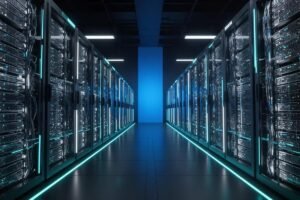
Data centre MEP design is becoming increasingly important as artificial intelligence changes how data centers are designed, developed and operated. As high-performance computing and AI workloads increase, data centre infrastructure faces growing demands for cooling capacity, reliable power distribution and operational efficiency.
Modern data centres cannot depend on server capacity alone. Their performance also depends on how effectively mechanical, electrical, plumbing and fire protection systems work together.
This makes coordinated MEP engineering a critical part of planning AI-ready data center infrastructure.
Why Data Centre MEP Design Is Changing with AI Workloads
Traditional data centre infrastructure was designed around different computing and thermal requirements. High-density AI computing introduces additional heat loads and greater demands on power distribution.
These changes can affect:
– Server room cooling requirements
– Electrical distribution and backup capacity
– Cooling-water infrastructure
– Equipment space and maintenance access
– Fire detection and protection strategies
Therefore, MEP design decisions must consider both present operating requirements and anticipated future expansion.
HVAC Design: Managing High-Density Heat Loads
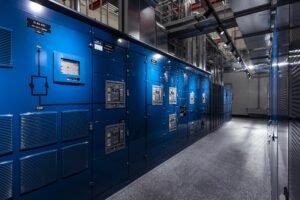
Cooling is one of the major engineering challenges in modern data centers.
Conventional air cooling may remain suitable for certain server environments. However, higher-density computing can require more advanced cooling arrangements.
Important considerations include:
– Precision air-conditioning systems
– Chilled-water plant capacity
– Hot-aisle and cold-aisle containment
– Rear-door heat exchangers
– Direct-to-chip liquid cooling
– Heat rejection and equipment redundancy
Liquid cooling is not a universal replacement for air cooling. Technology selection must depend on equipment requirements, rack density, operating conditions and facility design.
Electrical Design: Supporting Continuous Operations
Data centers depend on reliable electrical infrastructure.
MEP electrical planning should evaluate:
– Transformer and switchgear capacity
– Power distribution architecture
– UPS systems and battery arrangements
– Backup generator integration
– Electrical redundancy
– Cable routing and equipment accessibility
– Earthing and protection systems
Electrical design must consider critical loads, operational continuity and maintainability.
Plumbing Design: Cooling Water and Leak Management
Where liquid cooling or water-based heat rejection is adopted, plumbing design becomes particularly important.
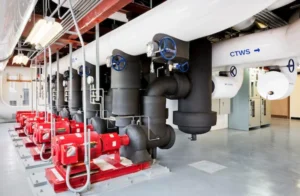
Engineers should evaluate:
-Cooling-water distribution
– Pump selection and system pressure
– Water quality and treatment
– Leak detection and isolation
– Drainage and maintenance arrangements
– Water consumption and reuse opportunities
Cooling performance and water efficiency must be considered together, especially where local water availability is a constraint.
Fire Protection and Life Safety
Data center fire protection requires careful coordination with server layouts, electrical rooms, cable spaces and cooling infrastructure.
Design considerations include:
– Fire detection and alarm systems
– Suitable suppression strategies
– Equipment-room protection
– Emergency access and evacuation provisions
– Coordination with electrical and HVAC controls
System selection must follow applicable codes, project requirements and specialist fire protection design.
Why MEP Coordination Matters
Even well-designed individual systems can create problems when they are not coordinated.
For example, poorly coordinated cable trays, chilled-water pipes and HVAC ductwork can create installation conflicts and restrict maintenance access.
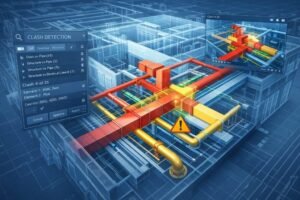
A coordinated design process should include:
1. Establishing project requirements and equipment loads.
2. Developing coordinated HVAC and electrical layouts.
3. Planning plumbing and cooling-water routes.
4. Integrating fire protection requirements.
5. Reviewing spatial clashes and maintenance access.
6. Validating design assumptions before construction.
BIM-based coordination and multidisciplinary design reviews can help identify conflicts earlier.
Designing for Efficiency and Future Expansion
AI infrastructure continues to evolve. A data centre designed around today’s equipment may require modifications as computing requirements change.
Future-ready planning should consider modular expansion, scalable power distribution, adaptable cooling infrastructure, energy monitoring and maintainable system layouts.
The objective is not simply to install larger equipment. It is to develop an infrastructure strategy that balances performance, reliability, resource efficiency and lifecycle requirements.
Conclusion
AI-ready data centers demand more than advanced computing hardware. They require carefully coordinated mechanical, electrical, plumbing and fire protection infrastructure.
Cooling architecture, power reliability, water management and multidisciplinary coordination must be considered together from the early design stages.
A-SQUARE MEP CONSULTANTS believes that effective engineering begins with integrated planning and informed design decisions.
Planning a data center or critical infrastructure development? Contact A-SQUARE MEP CONSULTANTS to discuss your MEP engineering requirements.
Frequently Asked Questions
Why is MEP coordination important in data centers?
It helps integrate cooling, electrical distribution, plumbing and fire protection while reducing design conflicts and improving maintainability.
Is liquid cooling necessary for every AI data center?
No. The appropriate cooling architecture depends on server specifications, rack density, thermal loads and project conditions.
What are the major HVAC challenges in AI data centers?
Managing high heat loads, airflow distribution, cooling redundancy, heat rejection and system efficiency.
Why is electrical redundancy important?
It helps maintain critical power availability during equipment failures or planned maintenance, depending on the facility’s resilience requirements.
How does BIM support data center MEP design?
BIM coordination helps identify spatial conflicts between ducts, pipes, cable trays, equipment and structural elements before construction.


